![SciNote_logo_color_2023.png]](https://knowledgebase.scinote.net/hs-fs/hubfs/SciNote_logo_color_2023.png?height=40&name=SciNote_logo_color_2023.png)
SciNote inventories enable you to keep track of your samples and create custom columns to capture and organize specific information. If you haven't already, we recommend using inventories for sample management!
In this example, we are using custom columns to capture:
- Sublot
- ID
- Status
- Instrument data (ex: DSC, TGA)
- Storage Location
- SDS
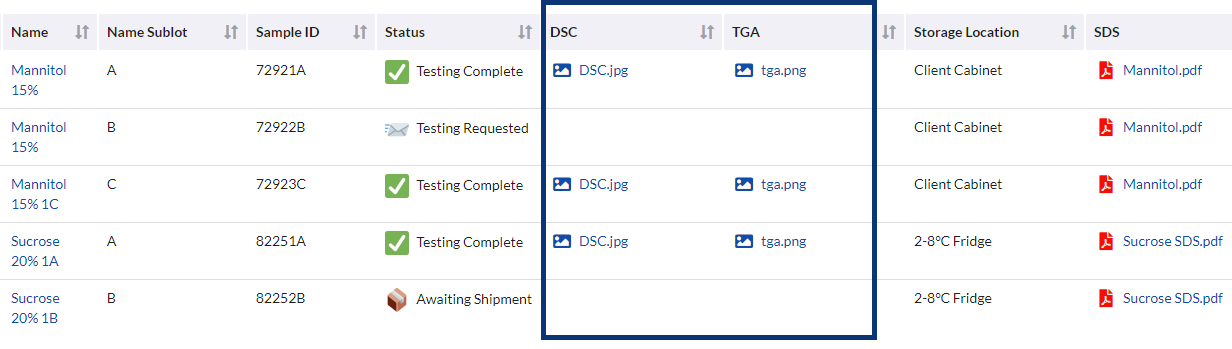
The instrument data is stored inside File-type columns. To learn how to create custom File-type columns please read this FAQ.
Before adding files to a custom column, make sure you have already created an inventory and added your samples to it. If you need help getting started, visit the SciNote Knowledge Base.
Once you have created a custom column, follow these steps to attach instrument data or other files to a sample:
- Select the sample you want to add results to
- Click Edit to add your file
- Find the correct column
- Add the file
- Click Save.
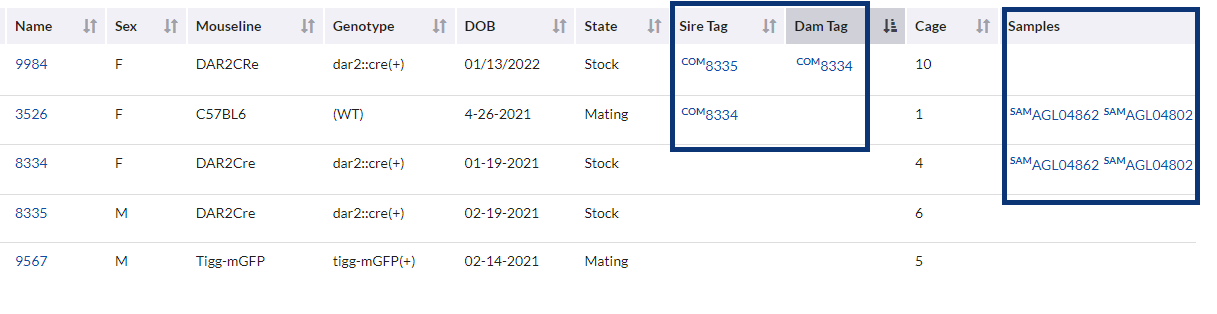
You can also use Smart Annotations (#) inside Text columns to reference another sample, inventory, project, experiment, or task. To learn more about Smart Annotations and how to use them effectively, visit the Smart Annotations FAQ.
If you have any questions, contact us at support@scinote.net. For more information about our Premium plans, please request a quote.